Council Rubbish Collection in London
If you are dealing with unwanted household rubbish, bulky items, or recurring waste issues at home or at work, Council Rubbish Collection in London can be an important part of keeping your property clean, safe, and manageable. Whether you live in a flat in Camden, a terraced house in Walthamstow, a mansion block in South Kensington, or you manage a shopfront in Croydon, understanding how local council rubbish collection works helps you make better decisions about what to put out, when to put it out, and when a professional collection service may be the simpler option.
London is a city of varied property types, tight streets, limited storage, busy timetables, and different borough rules. That means waste collection is rarely one-size-fits-all. Some households have weekly residual waste collections, others have food waste, recycling, green waste, or bulky item services with separate booking steps. For businesses, the rules can be even more specific. This page is designed to help local customers understand the practical side of rubbish collection in London and decide when to arrange a collection, what to expect, and how to prepare.
From single items to larger clearances, the right service can save time, reduce stress, and help keep your property clear without unnecessary disruption. If you are comparing options or need a collection that works around access, parking, and local restrictions, contact us today or request a free quote for a service that fits your situation.
What Council Rubbish Collection Means for London Residents and Businesses
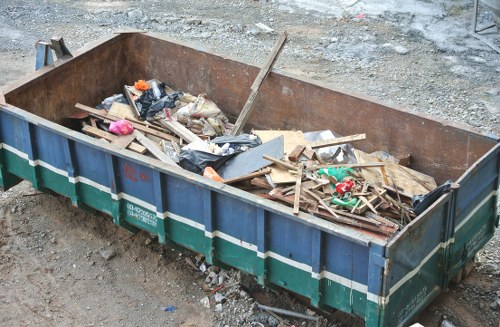
Council rubbish collection usually refers to the local authority service that takes away household waste, recycling, garden waste, and in many cases bulky items or special collections. In London, each borough manages its own system, which is why collection days, container rules, and booking methods can vary from area to area. What works in Hackney may be different from what applies in Brent, Ealing, Lewisham, or Hammersmith and Fulham.
For residents, this service is often the main way to dispose of everyday rubbish. For landlords, letting agents, and business owners, it may be one part of a wider waste plan. The key is knowing what the council covers, what needs extra booking, and when an independent rubbish collection is more suitable. Local knowledge matters because London’s roads, parking controls, estate layouts, and access points can affect collection timing and convenience.
There are also many situations where customers need a quicker or more flexible option than a standard council round. For example, if you have a loft full of old items, a tenancy changeover, a shop refit, or an unexpected pile of waste after work has been carried out, a tailored collection can be easier than waiting for the next available council slot.
How the Service Works in Practice

Most council collection services start with a straightforward process: put the waste out in the right place, on the right day, using the right containers or booking steps. That sounds simple, but in London the details matter. Some boroughs require residents to separate recycling carefully, others use sacks or bins, and many have specific rules for bulky waste, white goods, mattresses, or electrical items.
For larger items, you may need to book a special collection. That can involve choosing a date, confirming the types of items, and ensuring the waste is accessible. If items are left in a communal hallway, behind a locked gate, or in a basement area, collection teams may not be able to remove them unless access has been arranged properly. Good preparation helps avoid missed collections and unnecessary delays.
If you are using a professional rubbish collection service alongside or instead of council services, the process is often even more convenient. You describe what needs removing, explain where it is located, and arrange a suitable time. This is especially helpful for upper-floor flats, properties with no lift, premises with loading restrictions, or homes where waste has built up over time and needs more than an ordinary bin lift.
Typical steps customers follow
- Identify the type of waste: household rubbish, mixed items, recyclables, garden waste, or bulky items.
- Check whether the council service covers it or whether a separate booking is needed.
- Make sure items are placed in the correct location and accessible on collection day.
- For private collections, describe access, parking, floor level, and item quantity.
- Arrange the collection and prepare the items in advance where possible.
Common Waste Types Collected Across London
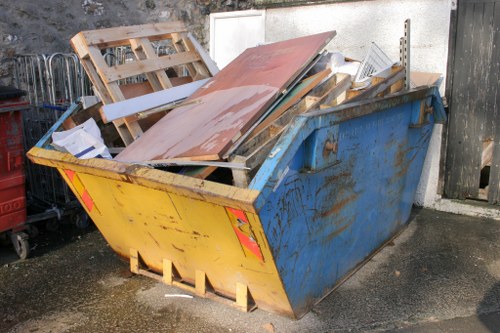
London households and businesses generate a wide range of waste, and collection needs can change depending on the season, the property, or the type of work being carried out. Council rubbish collection in London often includes standard domestic waste and recycling, but customers frequently need help with other items too. Understanding what is commonly collected makes it easier to plan ahead and avoid last-minute surprises.
Bulky waste is one of the most frequent reasons people look for extra support. Items such as wardrobes, sofas, bed frames, desks, chairs, and drawers can be awkward to move through narrow stairwells, especially in older Victorian and Georgian properties. In modern apartment buildings, shared corridors, concierge arrangements, and lift dimensions can also make removal more complicated. That is why many local customers choose a collection service that can handle the lifting and logistics.
Commercial waste is another major category. Offices in central London, small retail units on high streets, cafes, salons, and warehouses all produce different kinds of rubbish. Some have cardboard and packaging, some have fit-out waste, and others need regular removal of mixed refuse. A practical collection solution helps businesses keep premises clear and compliant with local waste handling requirements.
Examples of waste often collected
- General household rubbish
- Mixed bulky items
- Old furniture and flat-pack materials
- Domestic appliances and electricals
- Garden waste and cuttings
- Cardboard, packaging, and office waste
- End-of-tenancy clearances
- Light refurbishment and strip-out waste
Why Local Knowledge Matters in London

London presents waste collection challenges that are very different from those in less dense areas. Parking restrictions can make it hard to stop near a property. Some streets allow loading only during certain times. Terraced streets may be narrow, and many flats are accessed through shared entrances or gated estates. If waste collection is not planned around those realities, it can become stressful quickly.
A local team understands these conditions and can work with them. That might mean arriving at a particular time window, being ready for a fast load on a busy street, or planning for items that need to be carried from an upper floor. In areas such as Islington, Fulham, Clapham, Greenwich, or Shepherd’s Bush, the property layout and road access can be just as important as the waste itself.
Local relevance also matters because different neighbourhoods have different customer needs. A family home in Wimbledon may need a garden waste collection after landscaping work. A student flat in Stratford may need a quick end-of-tenancy clear-out. A shop in Hounslow may need help after a refit. A professional rubbish collection service that knows London can handle those situations with less friction and more flexibility than a generic one.
Local conditions that affect collections
- Controlled parking zones and loading restrictions
- Busy main roads and limited stopping space
- Shared entrances, lifts, and stairwells
- Estate access rules and concierge procedures
- Timed borough collection windows
- High-rise living and limited storage space
What Is Included in a Rubbish Collection Service

A good collection service should be clear about what is included, how access is handled, and what happens on the day. For many customers, the main appeal is convenience: you do not have to hire a skip, carry items to a depot, or wait around for multiple trips. Instead, the waste is removed from the property with minimal disruption.
In a typical rubbish collection, the team will remove agreed items from a suitable location and load them for disposal. Depending on the service, that may include lifting from a driveway, hallway, garden, basement, office floor, or roadside location. If waste is already bagged or gathered together, the process is usually quicker. If items are scattered across several rooms, a more detailed collection may be needed.
It is also common for customers to need help with awkward or heavy items. Sofas, mattresses, exercise equipment, broken wardrobes, and old appliances can be difficult to move safely without the right equipment and experience. For customers in London who want to avoid strain, damage to walls, or disruption to neighbours, having the removal handled properly is often the easiest solution.
Service features many customers look for
- Collection from homes, flats, gardens, shops, and offices
- Removal of bulky or awkward items
- Flexible booking around access and parking conditions
- Clear confirmation of what will be taken
- Suitable support for both one-off and repeat clearances
- Minimal disruption to neighbours, staff, or customers
When Council Collection May Not Be Enough
Although council rubbish collection in London is useful for many day-to-day needs, there are plenty of situations where customers need something more flexible. Council services may have limits on item type, size, quantity, or timing. Booking slots may not suit urgent situations, and some properties make kerbside placement difficult.
Private collection can be especially helpful if you are dealing with a time-sensitive move, a rental property that needs clearing quickly, or waste that has built up beyond what the standard bins can handle. It is also useful when the rubbish is spread across different areas of the property and needs to be removed in one visit. For many local customers, the choice is not about replacing council services entirely, but about filling the gaps when extra support is needed.
In commercial settings, flexible rubbish collection can be essential. Shops may need evening or early-day visits. Offices may need clearances after a refit or relocation. Restaurants and hospitality businesses may need regular removal of packaging, equipment, or unwanted stock. A responsive local service helps keep the property functional and presentable.
Signs you may need extra help
- Your council collection cannot take the item or quantity you have
- You need removal sooner than the next available council slot
- The waste is upstairs, in a basement, or behind difficult access points
- You are clearing a property between tenancies or before a sale
- Business waste is affecting operations or customer-facing areas
- You want fewer trips, less lifting, and less disruption
Preparing for Collection: A Practical Checklist
Good preparation can make council rubbish collection or a private collection far more efficient. In London, where space is often limited and access can be tight, a few simple steps can save time on the day and reduce the chance of problems. This is particularly helpful in blocks of flats, mews properties, converted houses, and commercial units with shared entrances or restricted parking.
Start by grouping your waste in one place where possible. If the items are inside the property, clear a route to them so they can be moved out safely. If you are placing items on the pavement for a council service, make sure you follow the borough’s rules and timing. If you are arranging a private collection, tell the team where the waste is located and whether there are any obstacles such as stairs, narrow corridors, or locked gates.
Also think about neighbours and building management. In apartment blocks or managed estates, waste left in communal areas can quickly cause complaints or block access. For that reason, it is usually best to schedule collection as close as possible to the agreed time and keep items tidy and contained until they are ready to go.
Preparation checklist
- Sort waste into categories if requested.
- Separate items that must stay behind.
- Make sure collection access is clear.
- Check if parking or loading arrangements are needed.
- Remove any fragile or valuable items from the area.
- Tell the team about stairs, lifts, or entry codes if relevant.
Pricing Factors: What Can Affect the Cost
Customers often ask what affects the cost of rubbish collection, and the honest answer is that it depends on several practical factors. Rather than focusing only on the amount of waste, think about the time, labour, and logistics involved. In London, access often plays a major role because it can be more time-consuming to remove items from upper floors or from properties with restricted vehicle access.
The main pricing factors usually include the volume of waste, the type of items, how easy it is to reach them, and whether specialist handling is required. A single mattress from a ground-floor flat is very different from a full room clearance in a top-floor maisonette. Likewise, mixed household waste, broken furniture, and light refurbishment debris may require different handling than a simple bag collection.
It is sensible to ask for a clear explanation of what is included before booking. That helps you compare options fairly and avoid misunderstandings. If you are managing a larger project, you may also want to ask whether the collection can be scheduled in stages or grouped with other items to reduce disruption.
Common factors that influence pricing
- Volume and weight of the waste
- Type of materials involved
- Number of floors and carrying distance
- Parking or access difficulty
- Urgency and timing of the collection
- Whether multiple rooms or areas are involved
Request a free quote if you want a practical estimate based on your property and waste type rather than a generic one.
Why Choose a Local London Company
Choosing a local company for rubbish collection in London can make a noticeable difference to the overall experience. Local teams usually understand borough boundaries, traffic patterns, parking pressure, and the realities of working around occupied homes and busy businesses. That local experience often translates into fewer delays and a smoother visit.
For residential customers, a local team can be easier to coordinate with when the collection needs to fit around school runs, working hours, building access times, or concierge availability. For business customers, local support can mean quicker scheduling, less downtime, and better handling of high-footfall locations where clutter cannot be left for long.
There is also a customer-service benefit to choosing someone who works in the area regularly. They are more likely to understand the needs of London properties, from compact flats in Kilburn to larger family homes in Richmond or mixed-use premises in Shoreditch. That means the service can be tailored around the realities of the property rather than forcing the property to fit the service.
Benefits customers value most
- Better understanding of local access and parking conditions
- More suitable timing for busy urban locations
- Practical support for flats, terraces, estates, and commercial units
- Less disruption for neighbours, tenants, staff, and customers
- A service shaped around real London collection challenges
Areas Covered Across London
Customers looking for council rubbish collection in London often want a service that is relevant to their part of the city. Waste needs can vary across boroughs and neighbourhoods, but the common theme is the same: people want a reliable way to get rubbish removed without stress. That includes homes, flats, landlords, estate managers, offices, shops, and hospitality venues across the capital.
Services may be arranged across inner and outer London, including areas with dense housing, larger roads, and mixed property types. Typical locations might include North London, South London, East London, West London, and Central London neighbourhoods, along with surrounding districts where local access and parking requirements still need to be considered carefully.
If you are based in a part of London with narrow streets, permit-only parking, or a building with controlled entry, a collection service that understands those conditions can save time and reduce hassle. Whether you are near a high street, residential estate, industrial estate, or transport hub, planning matters.
Examples of local customer settings
- Flats and apartment blocks
- Victorian and Georgian houses
- Converted properties and maisonettes
- Housing estates and managed developments
- Retail units and offices
- Studios, workshops, and light industrial premises
Residential and Commercial Customers: Different Needs, Same Goal
Households and businesses both need waste removed efficiently, but the reasons are often different. Residential customers may be clearing out after a move, replacing furniture, or catching up with accumulated clutter. They may also need support after a loft clearance, garden tidy-up, or renovation project. In many homes, limited storage means rubbish can build up quickly if it is not removed on schedule.
Commercial customers tend to need consistency, speed, and minimal disruption. A business may not be able to leave waste in sight for long, especially if customers visit the site daily. Offices, retail units, restaurants, salons, and workshops may all have different waste patterns, but they benefit from a collection service that can work around their operating hours and site rules.
In both cases, the goal is the same: a cleaner, safer, more usable space. Whether you need one-off council rubbish collection support or a flexible private collection arranged around London conditions, it helps to work with a team that understands both the practical and the local side of the job.
Examples of who uses the service
- Homeowners
- Tenants and landlords
- Letting and estate agents
- Shop owners and office managers
- Facilities teams and building managers
- Property developers and contractors
Book your service now if you want a practical waste removal solution that fits your property and schedule.
Frequently Asked Questions
Below are some of the most common questions people ask when they are looking into council rubbish collection in London or comparing it with a private collection option. If you are unsure about your own situation, these answers can help you decide what to do next.
Can I leave rubbish outside for council collection?
In many boroughs, yes, but only if you follow the local rules on timing, container use, and placement. Some areas require waste to be put out on a specific day, while others have stricter instructions for bags, bins, or bulky items. If you are not sure, check the local borough rules before putting anything outside.
What if I live in a flat with no easy access?
That is common in London. Flat access, shared stairwells, narrow lifts, and locked entrances can all affect collection. If the council service does not suit your property layout, a private rubbish collection may be easier because the team can plan for carrying distance, floor level, and access points.
Do councils collect large furniture and appliances?
Some boroughs do collect bulky items and certain appliances, but often by booking a special service. The exact items accepted and how they must be presented can vary. If the item is particularly large, heavy, or located in a difficult-to-reach space, a separate collection service may be more convenient.
Can businesses use council rubbish collection?
Businesses may have access to council waste services in some cases, but many commercial premises need separate arrangements. Shops, offices, and hospitality businesses often need a more flexible plan to handle their waste safely and in line with local requirements.
How should I prepare for a collection?
Keep items together, clear access routes, and make sure any gates, keys, or entry arrangements are ready. If the waste is in a flat, basement, or rear garden, let the service know in advance. The clearer the access information, the smoother the collection.
Choosing the Right Collection Option for Your Property
When choosing between council rubbish collection and a private collection in London, think about convenience, timing, item type, and access. If your waste is straightforward and your borough service fits your schedule, the council option may be enough. If your items are bulky, urgent, awkward to move, or spread around the property, a tailored service is often the better choice.
Many customers end up using both: the council for routine waste and a local collection service for the bigger jobs that need more time or flexibility. That balanced approach can work well for households, landlords, and businesses alike. It keeps everyday waste under control while giving you a practical backup when extra disposal needs arise.
If you are ready to clear space, reduce clutter, or deal with rubbish that has become difficult to manage, take the next step today. Contact us today to discuss your collection needs, request a free quote for your London property, or book your service now if you want to move forward without delay.