Junk removals services in your area
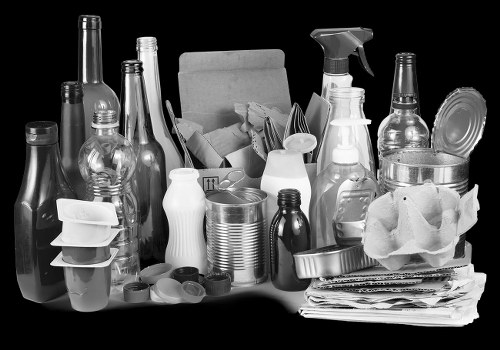
Junk removals services in your area should make it easier to clear unwanted items without turning the day into a disruption. We handle mixed household and commercial waste, bulky objects, general rubbish and awkward loads that are better removed in one organised visit than pieced out over several trips. The aim is straightforward: collect the items that are no longer needed, separate what can be diverted from disposal, and leave the space ready for its next use.
Our work covers planned clearances as well as one-off collections, from single items to fuller loads. That can include furniture, white goods, bags of rubbish, garden cuttings, office contents and other non-hazardous junk that does not belong in ordinary household bins. If you are comparing options, the most useful first step is to think about the type of items involved, how much needs moving and whether access affects the collection. Pricing and quotes gives a useful starting point for understanding how we approach estimates.
There are different ways to organise a collection depending on what needs taking away. Some customers want a fast load-up after a move or refit, while others need a more careful clear-out of a loft, garage or storage area. We aim for practical removal, sensible sorting and a tidy finish, rather than a one-size-fits-all approach. If you want to talk through a collection or request a quotation, contact us when you are ready.
Household junk collection and room-by-room clearances
Household junk removal is often at its best when it is organised around rooms, access points and item types. A household may have a few oversized pieces, a stack of broken furniture, mixed clutter in storage spaces or leftover items from a move. We can remove furniture, mattresses, small domestic appliances and general rubbish as part of a clear, practical collection. The right approach is usually the one that keeps movement simple and avoids unnecessary handling.
For clearances that involve more than one room, it helps to separate what is staying from what is leaving. That makes it easier to deal with items that are heavy, awkward or brittle, and it can reduce the time spent making decisions on the day. Careful sorting before collection is especially useful when a room includes a mix of recyclable items, reusable furniture and general waste. For a fuller domestic clear-out, see house clearance or the broader home clearance service.
Typical domestic items we can remove
Common domestic removals include wardrobes, beds, sofas, sideboards, tables, chairs, boxed clutter and unwanted items gathered during decorating or redecorating. Some customers also need help with loft contents, garage storage or items that have simply built up over time. When a collection includes bulky pieces, the practical question is often whether they can be carried out safely without damaging walls, floors or stairways. Services such as furniture clearance and sofa removal are designed with those practicalities in mind.
Bulky waste, single items and heavy objects
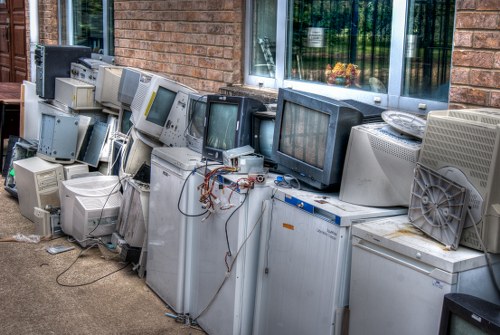
Bulky waste collection is useful when the problem is not volume alone, but shape, weight or awkward handling. A large item may be easy to identify but difficult to shift, especially if it must pass through narrow hallways, stairs, shared entrances or tight corners. We can remove single large items as well as grouped bulky waste, including beds, sofas, cabinets, white goods and other sizeable belongings that are no longer needed. The focus stays on safe movement and sensible loading rather than simply lifting everything as quickly as possible.
Some items need more specific planning than others. A mattress, for example, is different from a solid wardrobe or a broken appliance, because it compresses, flexes and occupies a lot of space for its weight. Large-item work also needs a clear view of access, disassembly options and whether anything should be separated before loading. If your main concern is a single large object or a small set of bulky pieces, large item collection and bulky waste collection are relevant places to look first.
When a job is built around heavy or awkward items, a little preparation goes a long way. If possible, keep the items together, leave enough room for safe movement and note any restrictions such as steps, low ceilings or shared access. Those details can influence how the collection is handled and what equipment is likely to be needed. Clear information makes the quotation process more accurate, especially when several bulky pieces need to be taken away in one visit.
Waste removal for homes, flats and shared buildings
Not every clearance begins with a single room. Some start in a flat, a shared entrance, a basement store or a property where access is more limited than a typical house. In those cases, the collection needs to be planned around loading routes, parking, stairs, lifts and the amount of carrying involved. We can deal with general junk, broken furniture, bags of waste and mixed household items in properties where space is tight and timing matters. The service suits both routine removals and more involved clear-outs.
Shared buildings often need extra thought about noise, protection and access. Items may need to be moved carefully through communal spaces, and the collection should be organised so that the work is efficient without being intrusive. That is one reason many customers look for a service that understands domestic removals as well as flat clearance. Where properties have been left with mixed contents, property clearance may be a better fit because it allows for a broader range of items and room conditions.
In practice, the most useful decisions are usually simple ones: what should be removed, what needs to stay, and whether anything is delicate, heavy or difficult to reach. That allows the collection to be shaped around the property rather than forcing the property to fit the collection. If you are preparing a quote, a short list of item types and access notes is usually enough to begin. From there, we can keep the process straightforward and focused on the actual load.
Garden waste, outdoor rubbish and green clearances
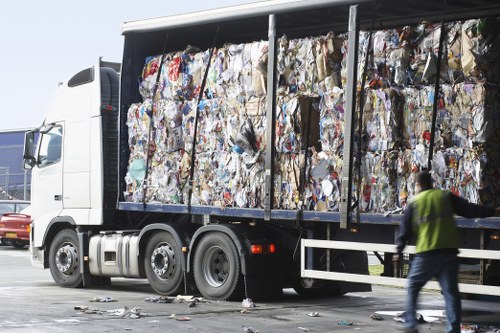
Outdoor junk removal deals with the contents that build up in gardens, yards, sheds and outside storage areas. That can include branches, hedge cuttings, grass bags, old plant pots, broken outdoor furniture, timber offcuts and mixed garden rubbish. We also deal with general outdoor clutter where the issue is not only greenery, but the collection of assorted items left after maintenance, landscaping or a seasonal tidy-up. The work is often more effective when it is sorted by material rather than by where it happens to be stored.
Some garden collections involve loose waste that can be bagged or gathered, while others involve heavier or more awkward objects that are better moved intact. The condition of the site matters too: narrow side access, uneven ground, damp surfaces and distance from the collection point can all affect the handling plan. For customers comparing outdoor options, garden waste clearance and garden clearance describe closely related kinds of work, with the difference often coming down to how much mixed material is involved.
It helps to separate garden waste from household rubbish before the collection starts, especially when the load includes a mix of natural material and man-made items. That keeps recyclable or reusable materials easier to identify and makes the clearance more orderly. A well-planned outdoor collection is usually less about speed for its own sake and more about leaving the area ready for whatever comes next, whether that is ongoing maintenance, renovation or a fresh layout.
Commercial waste and office clearances
Business clearances are often different from domestic junk removals because the items may need to be moved around operating hours, shared workspaces or security arrangements. We can collect office furniture, filing items, old storage pieces, general business rubbish and other non-hazardous contents that are no longer required. The aim is to keep the process orderly and low-disruption, with the collection matched to the premises rather than the other way around.
Offices and commercial units often have a mix of items that look similar but need different handling. Desks, chairs, cabinets, shelves, packaging waste and obsolete equipment may all be grouped together, yet the decision-making can depend on whether the items are being replaced, reconfigured or simply removed. For larger or more structured work, office clearance and commercial waste collection are practical pages to use when understanding the scope of business removal work.
How commercial collections are usually planned
Business collections are easier to manage when the main categories are identified in advance. A simple list of furniture, waste, storage items and any particularly large pieces gives a better starting point than an undifferentiated pile. If the job includes both reusable items and rubbish, that distinction should be noted early so the collection can be organised properly. For some workplaces, office clearances may suit a broader project, while business waste removal can suit smaller ongoing disposal needs.
House clearances, probate work and fuller property removals
Some jobs need more than a single-item pickup. A house clearance or probate clearance may involve several rooms, stored belongings, furniture, personal effects and a mixture of waste and reusable items. These are usually more methodical projects, where the sequence of removal matters as much as the final load. We can handle practical clear-outs with an eye on what needs to remain in place, what can be grouped together and what may need careful sorting before removal.
House clearances are useful where the work is broader than an ordinary room tidy, while probate clearance is appropriate where contents may need more deliberate handling and organisation. The same applies to probate house clearance, which can suit properties that need everything removed with care and structure. A clear list of rooms and item groups is usually the most practical starting point for this kind of work.
For these larger clearances, it can help to decide in advance which items are to be prioritised, which areas should be left untouched and whether anything is fragile or sentimental. Good direction saves time and reduces the chance of misunderstanding, particularly where several people are involved in the decision. If you want to request a quotation, a room-by-room summary is usually more useful than broad descriptions, because it lets us shape the collection around the actual contents.
About the area
The area around the named location is shaped by the balance between built-up streets, local amenities and the everyday movement of people, goods and services. In many English towns and suburbs, that pattern is visible in the way residential roads sit beside retail parades, workplaces, schools and community facilities. Older buildings often stand alongside later infill development, so the local landscape may include a mix of terraced houses, detached homes, low-rise commercial units and modern estates. Public spaces usually play a central role in how the place is experienced, with parks, footpaths, playing fields or small green spaces offering breathing room within the urban fabric. Transport links can also influence the rhythm of daily life, whether through rail stations, bus routes or main roads that connect the area to surrounding districts. Architectural detail tends to reveal different phases of growth, from surviving older brickwork and traditional shopfronts to newer housing or redevelopment plots. Local identity is often expressed through schools, sports clubs, places of worship, community halls and independent businesses, which together create a practical and social centre of gravity. The result is a place that is rarely defined by a single landmark alone, but by the relationship between its streets, services and shared spaces. That layered character gives the area its own everyday pace and makes it recognisable to residents and regular visitors alike.
What we can remove and how it is handled
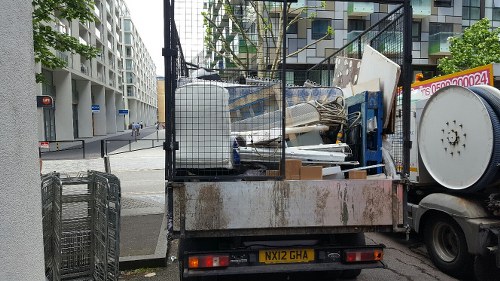
Our junk removals services are built around the kinds of items people most commonly need to move on: broken furniture, old bedding, household clutter, white goods, general rubbish and mixed waste from domestic or business settings. We also handle collections that involve a combination of reusable and disposable items, provided the contents are suitable for normal removal. The practical question is usually not whether something is useless, but how it should be separated, carried and loaded in a way that suits the property and the contents.
Some loads are best treated as a straightforward rubbish collection, while others are better described as a more general clearance. That distinction matters because it helps set expectations around the number of items, the likely handling and the time needed on site. Where material recovery is relevant, waste recycling and recycling and rubbish are useful to review alongside removal options. They show how mixed loads may be considered once the collection is complete and items are separated.
Collection planning is usually easiest when it starts with the items themselves. Think in terms of size, weight, condition and access rather than trying to describe everything as a single job. That approach works well whether the load contains a few small items, a full garage of mixed belongings or a broader clear-out with several categories of waste. It also helps keep the quotation process sensible, because the estimate can reflect the actual work instead of a vague description.
Item-specific removals and disposal choices
Some customers know exactly what needs to go, even if the rest of the load is mixed. A sofa, mattress, fridge or bed may be the main item, with several smaller pieces gathered around it. In those cases, item-specific services can be useful because they make the scope easier to recognise and the collection easier to organise. We can remove individual pieces or grouped items, depending on what you want cleared and how the property is arranged.
Specialised pages can also help you compare the most suitable route for a particular object. For example, mattress disposal, fridge disposal and bed disposal each point to a distinct kind of removal, while furniture removal and collection and furniture disposal suit broader household pieces. The right choice depends on whether you are dealing with one item, a matched set or a wider assortment of contents.
If you are unsure which page best fits the job, start with the object that takes the most space or creates the hardest access problem. That is often the piece that determines the rest of the collection. From there, any additional items can be grouped into the same visit where appropriate. A clear item list is usually better than a broad description, because it gives a more accurate sense of what needs moving and where the work begins.
Getting a quotation and preparing the collection

When you request a quotation, the most helpful details are the item types, the approximate amount to be removed and anything that affects access. Photographs can be useful, especially where there are bulky items, stairs, a shared entrance or a complicated layout, but a brief written summary is also valuable. If there are separate piles, different rooms or items that must stay in place, saying so early helps keep the estimate focused. The aim is to make the quote reflect the actual collection rather than an overly broad guess.
Before the removal day, it is sensible to think about what has been left out for collection and what should remain in the property. If the job includes several rooms, a garage, loft or garden area, it is usually easier when the items are grouped in a way that leaves clear walking space. That does not mean everything has to be moved to the same place, only that the collection is easier when the route and load are simple to understand. Contact us to request a quotation when you are ready.
We also keep the wider process straightforward by matching the collection to the kind of waste involved. That may mean a domestic clear-out, a business load, a bulky item pickup or a fuller property clearance. If you want to compare the broader terms involved, waste removal, rubbish removal and waste clearance show the different ways people describe the work. For a quotation, the main thing is still the same: tell us what needs taking away, and we can work from there.