House Clearance in London
Fast, practical help for homes, flats, offices, and estates across the capital

If you need House Clearance in London, you are usually dealing with more than just a pile of unwanted items. It might be a flat that needs emptying before a move, a family property that has to be cleared after a bereavement, a rental that needs turning around quickly, or a home that has simply filled up over the years. In a city like London, where space is tight and access can be awkward, having a reliable local clearance team makes a real difference.
A good clearance service should do more than just remove rubbish. It should make the process easier, safer, and less stressful from start to finish. That means understanding London property types, from converted Victorian terraces and mansion blocks to high-rise apartments, mews houses, council flats, and commercial units. It also means working around parking restrictions, narrow stairwells, shared entrances, lift availability, and busy roads that can make even a simple job more complex.
Whether you are clearing a single room or an entire property, the right team can help with the lifting, sorting, loading, and disposal so you do not have to manage it all alone. If you are looking for a local service that is efficient, considerate, and ready to work around your schedule, request a free quote and arrange a convenient collection time.
What house clearance involves

House clearance usually means removing furniture, white goods, household clutter, personal effects, general junk, and other unwanted items from a property. In London, this often includes properties that have been lived in for many years, as well as homes that need to be emptied quickly for sale, end of tenancy work, refurbishment, or probate. The service can be tailored to remove just a few bulky items or to clear everything from a property in one visit.
For many customers, the biggest value is having a team handle the physical work and the logistics. Large wardrobes, beds, sofas, cupboards, carpets, boxes, broken appliances, old electronics, and garden waste can all be heavy or awkward to move. In flats and terraced houses across London, the challenge is often not just the item itself, but getting it out safely without damage to walls, hallways, doors, or communal areas.
House clearance in London is also commonly needed for sensitive situations. For example, clearing a loved one’s home after a bereavement can be emotionally difficult. A professional service should be respectful, patient, and organised, giving you space to keep what matters while helping remove the rest in a calm and structured way.
Types of properties we commonly clear
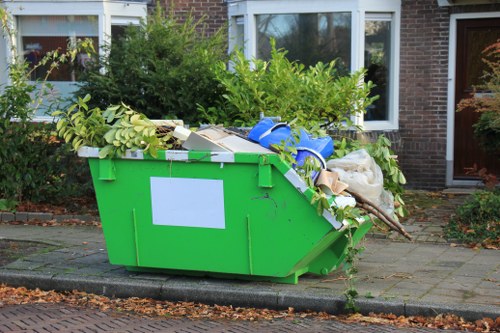
London is hugely varied, and so are the properties that need clearing. A local clearance team should be comfortable working in different settings and adapting to the layout and access of each one. That might include modern apartments with lift access, older homes with narrow staircases, basements, loft spaces, maisonettes, ex-local authority properties, office spaces, and retail units.
Some of the most common clearance requests in the capital include:
- House and flat clearances for owners preparing to sell
- End of tenancy clearances for landlords and letting agents
- Probate and bereavement clearances for families and executors
- Office and commercial clearances for business closures or relocations
- Furniture and appliance removal from occupied or vacant properties
- Garage, loft, basement, and shed clearances
- Gardens and outdoor spaces that need tidying and waste removal
Every property is different, and the best approach is to assess what needs to stay, what needs to go, and how the job can be completed with the least disruption. In busy parts of London, that also means planning the load-out route carefully and keeping neighbours, building managers, or concierge teams in mind.
Why London customers choose a local clearance service

Choosing a local company for a clearance job offers practical advantages. London traffic can make timing important, and parking restrictions can affect how quickly a team can load items. A local service is more likely to understand borough-specific restrictions, controlled parking zones, loading bays, and access issues that come with working in areas such as Camden, Hackney, Islington, Westminster, Lambeth, Southwark, Wandsworth, Ealing, Haringey, Kensington, and neighbouring districts.
Local experience also matters because London homes often come with unique access challenges. A property may be on a busy high street above a shop, down a narrow mews lane, at the top of several flights of stairs, or inside a block with limited waiting space for vehicles. A team that knows how to plan for these conditions can work more efficiently and reduce the likelihood of delays or awkward surprises.
There is also a trust factor. Customers often want a company that can turn up when agreed, handle items carefully, and explain what will happen to the contents being removed. For many people, being able to speak to a team that understands local neighbourhoods and local housing stock makes the entire process feel more manageable. Contact us today if you want a straightforward clearance arranged without unnecessary hassle.
What is included in a house clearance service

A professional clearance service should be clear about what is included so you know exactly what to expect. While every job is different, most house clearance work in London can cover a wide range of tasks carried out by the team on your behalf. The aim is to save you time, avoid lifting and transport problems, and leave the property in a better state for its next stage.
Typical inclusions may involve:
- Removal of furniture, appliances, household items, and general clutter
- Careful loading, carrying, and transport of items from the property
- Sorting items for reuse, recycling, or disposal where possible
- Clearing rooms, cupboards, lofts, basements, garages, and outbuildings
- Removal of broken or unwanted white goods and bulky waste
- Work in houses, flats, offices, shops, and other local premises
- Attention to access routes, communal spaces, and property condition
Some customers want a full property clearance, while others only need help with specific rooms or larger items. If you are not sure what level of service you need, a local team can usually help you work out the most practical option based on the property, the volume of items, and the timescale.
How the process works
Simple, organised, and designed to reduce stress
A well-run house clearance should follow a clear process from enquiry through to completion. The aim is to make it easy for you to move forward, whether you are emptying a flat, sorting a family home, or preparing a rental property for new tenants. The exact steps may vary depending on the job, but the process normally follows a straightforward pattern.
First, you explain what needs clearing and share the property details, including access, parking, floor level, and any time limits. Then the team can assess the work and provide a quote based on the scale of the clearance. Once agreed, a suitable time is booked, and the team arrives ready to carry out the work efficiently and respectfully.
On the day, items are removed, loaded, and taken away for the appropriate next step. When the clearance is finished, the property should be left tidy and ready for the next stage of use, whether that is cleaning, decorating, letting, selling, or handover to an agent or family member.
Preparation checklist before your clearance
Preparing a little in advance can make the job quicker and help ensure nothing important is removed by mistake. You do not need to do heavy lifting yourself, but a bit of organisation can save time and make the day easier for everyone involved.
Here is a helpful checklist for customers arranging a property clearance in London:
- Identify any items you want to keep, sell, donate, or pass to family members.
- Set aside documents, valuables, keys, medications, and sentimental belongings.
- Tell the team about parking restrictions, entry codes, concierge rules, or loading access.
- Inform neighbours or building management if access through communal areas is likely.
- Decide whether you need a full clearance or only specific rooms or bulky items.
- Check whether there are any fragile areas, narrow stairs, or lift limitations.
- Remove anything you are not sure about before the team starts, if possible.
If the property is empty or you cannot attend in person, a local team may still be able to help as long as access arrangements are in place. This can be especially useful for probate properties, tenanted flats, or commercial clearances where timing and coordination matter.
Pricing factors for clearance jobs in London
What affects the cost of a house clearance?
Every clearance is different, so pricing usually depends on the amount and type of items to be removed, the access to the property, and the time needed to complete the work. London properties can vary widely, and a job in a basement flat with no lift may take longer than the same volume of items in a ground-floor property with direct access.
Common pricing factors include:
- How much needs to be cleared, from a few items to a full property
- The type of waste or furniture involved
- How easy it is to access the property
- Whether parking is available nearby
- Distance from the vehicle to the property entrance
- Urgency or time constraints
- Any special handling requirements for delicate or bulky items
It is always sensible to ask for a clear explanation of what is included in the quote so you can compare services properly. A fair quote should reflect the actual work involved, not just a rough estimate based on square footage. If you need a quick turnaround, ask how the team handles urgent clearances and whether they can work around your schedule.
House clearance for landlords, agents, and businesses
House clearance in London is not just for private homeowners. Landlords, letting agents, property managers, and business owners often need fast, dependable support when a property must be emptied or reset between occupants. In a city with high turnover and tight deadlines, speed and reliability can make a major difference.
For landlords and agents, common situations include abandoned possessions after a tenancy, partial clearances before refurbishment, and removal of bulky items left behind at the end of a lease. For businesses, the service may involve office furniture removal, stock clearance, archive disposal, or the emptying of commercial premises after a move or closure.
A local clearance company can help reduce downtime, support property handovers, and make sure the premises are ready for the next stage. This is especially useful where access is limited to short time windows, shared entrances, or building management rules.
Probate and bereavement clearances
Probate clearances are often among the most sensitive jobs a clearance team handles. When someone has passed away, the family or executor may need to clear the property before sale, transfer, or renovation. This can be an emotional task, particularly when the home contains many years of personal belongings and memories.
A considerate service should give you time to identify important items and should work in a way that feels orderly rather than rushed. In many cases, families want help separating sentimental items, furniture, paperwork, and general household contents so the property can be cleared with care. This can be especially important in London homes where storage areas such as lofts, cupboards, and cellars often contain items collected over a long period.
If you are arranging a probate or bereavement clearance, it can help to work with a team that understands the need for discretion and flexibility. You may need the property cleared in stages, or you may prefer to remove only selected contents first. Book your service now if you need practical support with a sensitive clearance.
Residential clearance in London homes and flats
Residential clearances make up a large part of the work in the capital because homes often need to be emptied for moving, downsizing, renovating, or making space again after years of accumulation. In London, this can involve everything from compact studio flats to large family houses and period conversions with awkward access.
One of the biggest challenges in residential clearance is moving items out without causing damage or inconvenience. Stairwells may be narrow, hallways may have corners that make bulky furniture difficult to turn, and shared entrances may need to be kept clear for neighbours. A professional team should plan the job carefully and work efficiently so the property can be cleared with minimum disruption.
Whether you are in a terraced house in North London, a riverside apartment in South London, or a townhouse in West London, the service should be adapted to the layout of the property and the amount of content that needs to be removed.
Commercial and office clearance across London
London businesses often need clearance support during office moves, refurbishments, downsizing, or closure. Commercial clearance can involve desks, chairs, storage units, filing cabinets, electronics, shelving, and general office contents. Retail, hospitality, and light industrial spaces may also require removal of stock, fixtures, and miscellaneous equipment.
For commercial customers, timing is often critical. A clearance team should be able to work around building access rules, business hours, loading restrictions, and the need to avoid disrupting neighbouring tenants. This is particularly important in shared buildings, business parks, high streets, and mixed-use developments throughout the city.
Choosing a local service means working with people who understand the pace of London business and the realities of clearing premises in dense urban areas. If you need a clear-out before handing back keys, preparing for contractors, or returning a workspace to a usable condition, a professional team can help keep things moving.
What happens to the items removed?
Many customers want reassurance that their unwanted items will be dealt with properly. A responsible clearance service should sort items where possible so that reusable materials, furniture, metals, and other suitable contents can be separated from general waste. This helps support a more organised and responsible process overall.
In real-life clearance jobs, not everything is ready for immediate disposal. Some items may be suitable for reuse, while others may need to be broken down or taken to the appropriate waste facility. The important thing is that the work is handled carefully and in line with the type of material being removed. This is another reason to choose an experienced local company rather than trying to manage everything yourself.
For customers, the main benefit is peace of mind. You can focus on the property itself and the next step, whether that is sale, letting, refurbishment, or empty handover, while the clearance team deals with the logistics.
Areas covered across London
House clearance needs arise across all parts of London, from busy central boroughs to quieter residential streets on the outskirts. A local team can usually cover a broad area and work in both inner and outer districts, depending on the job and access arrangements.
Typical service areas may include Central London, North London, South London, East London, West London, and surrounding neighbourhoods. That can mean work in areas such as Camden, Clapham, Croydon, Hackney, Hammersmith, Haringey, Islington, Lewisham, Waltham Forest, Westminster, Wimbledon, and many nearby locations.
The real advantage of a local service is flexibility. If you are not sure whether your area is covered, it is usually worth asking. Many clearance jobs are planned around the exact property rather than just a postcode, especially when access, parking, or building rules need to be considered.
Why a professional clearance is often the better choice
Some people start by thinking they can clear a property themselves, but once they see the volume of items, the lifting involved, and the difficulty of transporting everything through London streets, they realise it is more work than expected. A professional service can save time, reduce physical strain, and avoid the stress of arranging a van, lifting equipment, disposal trips, and labour all at once.
There is also the issue of safety. Heavy furniture, sharp edges, dusty loft spaces, broken items, and awkward appliances can all create risks if handled without the right equipment or experience. In older properties, it is not unusual to encounter steep staircases, uneven floors, and tight turns that make bulky removal especially difficult.
By using a local team, you get support from people who do this kind of work regularly. That experience can make the job quicker, cleaner, and easier to manage, especially when the clearance has to be completed within a fixed time frame.
Frequently asked questions
Can you clear a property if I am not there?
Yes, in many cases. As long as access is arranged in advance and the important items have been set aside, a clearance can often be completed without the customer being present.
Do you handle full and partial clearances?
Yes. Some customers need an entire property emptied, while others only want selected rooms, a loft, a garage, or a few bulky items removed.
Can you help with flats and upper-floor properties?
Yes. Flats, maisonettes, and upper-floor homes are common in London, and clearance teams are used to dealing with stairs, lifts, and communal access.
What if the job is urgent?
If you need a fast turnaround, ask about availability when you enquire. Urgent jobs can often be arranged depending on the size of the clearance and the access requirements.
Is house clearance suitable for landlords and businesses?
Yes. It is often used for end-of-tenancy clearances, office clear-outs, shop vacates, and property reset work before refurbishment or re-letting.
How do I know what to keep before the team arrives?
It helps to set aside documents, valuables, family keepsakes, and any items you may want to sell, store, or reuse. If you are unsure, sort those items first before anything else is removed.
How to get started
If you need house clearance in the capital, the easiest first step is to request a quote and explain what needs to be removed. Share the type of property, the number of rooms, the floor level, and whether there are any access or parking concerns. The more detail you can give, the easier it is to plan the job properly.
For many customers, the best outcome is a service that feels simple: one clear visit, no unnecessary delays, careful handling of the property, and a tidy finish at the end. That is exactly what a well-organised local clearance team should aim to provide.
Contact us today to discuss your property and arrange the next step. If you want practical support from a team that understands London homes, flats, offices, and access challenges, request a free quote and get the process moving.
Final thoughts for London customers
When you are dealing with a home, flat, or business premises that needs clearing, the service you choose should make life easier, not harder. In London, that means finding a team that understands the local streets, the building layouts, the parking limits, and the pace of the city. It also means finding people who can work carefully and respectfully, especially when the clearance involves family homes or sensitive circumstances.
Whether you need a full clearance, a partial clear-out, probate support, or removal of bulky items from a property, the right local company can help you move forward with confidence. If the space needs to be emptied, tidied, and prepared for what comes next, professional help is often the simplest and most practical option.
When you are ready, book your service now and take the pressure off the job. A well-planned house clearance can save time, reduce stress, and give you a clean start in a busy city where space is always at a premium.