House Clearances in London
When you need house clearances in London, it is usually about more than simply removing unwanted items. It can be tied to a move, a bereavement, a property sale, a tenancy change, or a long-overdue reset in a home that has accumulated too much over time. In a city as busy and varied as London, the right service needs to be practical, discreet, efficient, and flexible enough to handle everything from compact flats to large family homes, mews properties, maisonettes, converted buildings, and commercial premises.
For many local customers, the biggest challenge is not deciding whether to clear a property, but figuring out how to do it without adding extra stress. Narrow staircases, limited parking, controlled access, lift restrictions, permit zones, busy roads, and time-sensitive move dates all play a part. A trusted local clearance team can take on the heavy lifting, sorting, and removal so you can focus on what comes next. Whether you need a full property clearance or just help with a few bulky items, having a service that understands London makes a real difference.
Our approach is straightforward: assess the work, plan the clearance carefully, handle items respectfully, and leave the property ready for its next step. If you are comparing options for a London house clearance, this page explains what is included, how the process works, what affects the cost, and how to prepare. If you are ready to move ahead, request a free quote or contact us today to discuss your property and timeframe.
Why house clearances matter in London

London homes come in many shapes and sizes, and that variety affects how a clearance needs to be handled. A top-floor flat in Islington is very different from a terraced house in Southwark, a basement property in Camden, or a family home in Ealing. Some places have tight stairways and no lift, while others have shared hallways, residents’ permits, or access only at certain hours. A local team that understands these conditions can plan the job around the reality of London living.
There are also many reasons people look for a house clearance service. A property may be emptying after a move abroad, a landlord may need a tenancy turned around quickly, or a family may be dealing with the contents of a home after a loss. In other cases, customers simply want to reclaim space from years of furniture, appliances, clothes, paperwork, and general household clutter. Whatever the reason, the aim is the same: make the process easier, faster, and more manageable.
Professional clearance support is especially helpful when the work involves more than basic rubbish removal. A proper service can handle furniture dismantling, sorting for reuse or recycling, and the safe removal of awkward or heavy items. It can also reduce the risk of damage to walls, flooring, communal areas, and stairwells, which is particularly important in older London buildings where access is tight and repairs can be disruptive.
What is included in a house clearance service?

A good house clearance in London should be more than a quick load-and-go. Customers usually want a service that is organised, respectful, and able to adapt to the contents and layout of the property. Depending on what needs clearing, the service may include furniture removal, appliance collection, bagged household waste, loft or cellar contents, and the removal of items from garages, sheds, and outbuildings.
Many clearances also involve sorting items into categories so that reusable goods, recyclable materials, and general waste are handled appropriately. This can be particularly valuable when clearing a full property, because it saves you from having to decide everything in advance. If there are items you want to keep, they can be separated before the clearance begins. If there are documents, photographs, or sentimental items that need careful handling, those can be set aside too.
Depending on the property and your instructions, a clearance may also cover:
- Removal of sofas, wardrobes, beds, tables, chairs, and cabinets
- Kitchen contents such as small appliances, crockery, and boxed items
- White goods like fridges, freezers, washing machines, and ovens
- Loft, attic, cellar, shed, and garage contents
- Office furniture and stock from mixed-use or commercial premises
- Bulky items that are awkward to move through narrow hallways or stairs
Types of property we clear across London
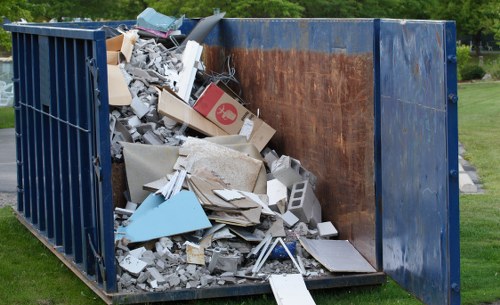
London properties vary widely, and each type comes with different practical considerations. A one-bedroom flat in Tower Hamlets may have limited lift access, while a Victorian terrace in Wandsworth might involve multiple floors, basement storage, and on-street parking restrictions. A detached home in outer London can have a larger volume of contents, more outbuildings, and garden waste to remove. The service should fit the property, not the other way around.
We regularly help with domestic house clearances and also work with landlords, letting agents, executors, solicitors, property managers, and business owners. That means we can support a wide range of situations, including end-of-tenancy clearances, probate clearances, move-out cleanups, pre-sale clearances, and office or shop clear-outs. If the property has a mix of furniture, fixtures, and general contents, a tailored plan keeps the process efficient.
Typical properties and premises we clear include:
- Flats and apartments in purpose-built or converted blocks
- Terraced, semi-detached, and detached houses
- Basement and upper-floor properties with tight access
- HMOs and shared homes with multiple occupiers
- Garages, lofts, sheds, and storage spaces
- Small offices, retail units, and mixed residential-commercial spaces
How the clearance process works

Customers often want to know what happens from the first enquiry to the final sweep-through. The process is designed to be simple. First, you explain the property, the type of contents, the access situation, and your preferred timeframe. From there, the job can be assessed and a quote prepared based on the actual work required, not on assumptions. If the property is straightforward, the clearance can often be arranged quickly. If it is larger or more complex, a little more planning may be needed.
On the day, the team arrives with the right equipment and begins by confirming what is to be removed and what must stay. This is especially important if there are items you want retained, sold, donated, or passed to family members. Everything is handled in an orderly way so the clearance moves safely through the property. Items are then removed, loaded, and taken away for appropriate processing.
In many cases, customers appreciate being able to stay involved at a level that suits them. Some prefer to be present throughout the clearance. Others want to point out the items to keep and then leave the team to complete the work. Either way, communication matters. A local team that is used to working in London understands the value of staying organised, respecting neighbours, and keeping disruption to a minimum.
Step-by-step overview

Here is a simple outline of how a typical clearance may be handled:
- Initial enquiry: You describe the property, contents, access, and deadline.
- Assessment: The amount of work and any special requirements are reviewed.
- Quote: A clear price is prepared based on the job details.
- Scheduling: A convenient date and time are arranged.
- Clearance day: Items are removed safely and efficiently.
- Final check: The space is left tidy and ready for the next stage.
That simple structure helps reduce stress, especially when the property needs to be handed over quickly. It also makes it easier to coordinate with solicitors, estate agents, landlords, or family members if the clearance is part of a wider property move or transfer.
If you are comparing options for house clearance London customers can rely on, look for a service that gives you clear explanations, realistic timing, and flexibility around access. Those practical details matter just as much as the removal itself.
Preparing for a house clearance
What customers can do before the team arrives
You do not need to do all the work yourself before the clearance day, but a little preparation can help the job run more smoothly. If you already know which belongings you want to keep, moving them to one room or clearly labelling them can save time. In a busy London property, where space is limited, that can make a significant difference.
If the property has multiple floors, try to think about access in advance. Are there narrow stairs, shared entrances, a resident-only lift, or parking restrictions outside? Letting the team know these things beforehand helps them plan the right equipment and allocate enough time. It also reduces the chance of delays caused by access issues or the need to park farther away than expected.
A useful checklist before the clearance includes:
- Separating any items you want to keep
- Setting aside important documents, jewellery, and personal papers
- Pointing out anything fragile or valuable that needs extra care
- Making sure access details are clear, including door codes or concierge rules
- Checking whether parking, permits, or loading restrictions apply
- Noting any items that require special handling, such as heavy safes or large appliances
When a bit of extra planning helps most
Planning is especially useful for probate clearances, hoarded properties, full-flat clearances, and situations where several people may have an interest in the contents. In those cases, it can help to agree in advance what will be removed, what will remain, and who will be present. A calm, methodical approach is usually the best way to keep the process straightforward.
Pricing factors for house clearances in London
What affects the quote?
Customers often want a price early on, and that is understandable. While every job is different, the main factors that influence the cost are usually the volume of items, the type of contents, the ease of access, and how much labour is required. A small flat with straightforward access will usually take less time and effort than a large house with loft contents, basement storage, and difficult parking.
The category of items can also matter. Heavy furniture, white goods, and awkward items may require extra manpower or equipment. If the property contains a lot of reusable items, the clearance may be different from one where most contents are general waste. The distance from the property to the loading area can also affect the time needed, especially where the team has to navigate stairs, long hallways, or restricted entry points.
Factors that often influence a quote include:
- The overall size of the property
- The quantity of contents to be removed
- Access limitations, including lifts, stairs, and parking
- Whether the job involves a full or partial clearance
- Special handling needs for bulky or delicate items
- Time sensitivity or out-of-hours requirements
Why an in-person or detailed assessment helps
A careful assessment helps avoid surprises and ensures the quote matches the actual work involved. In London, that matters because two properties of the same size can still be very different in practice. A ground-floor flat with easy access may be very straightforward, while a similarly sized top-floor property with no lift and difficult parking may need significantly more effort.
Why choose a local London clearance team?
Practical local knowledge makes a difference
Choosing a local team for house clearances in London offers clear advantages. Local crews understand congestion, parking zones, busy loading times, estate access rules, and the reality of moving goods through streets where space is limited. That knowledge helps keep the clearance efficient and reduces unnecessary delays.
Local experience also matters when you need the work handled sensitively. London is full of occupied flats, shared entrances, conservation areas, and closely spaced homes. A team that regularly works in the city knows how to move through these environments carefully, keep communal spaces tidy, and work with minimal disruption to neighbours. That can be especially helpful in blocks where noise or access restrictions are part of daily life.
Another benefit is flexibility. Local teams are often better placed to respond to short lead times, changing schedules, and last-minute instructions. If a solicitor needs a property cleared before completion, or a landlord needs a flat turned over between tenancies, a nearby service can often adapt more easily than a company unfamiliar with the area.
In short: local knowledge, responsive scheduling, and an understanding of London’s properties and access conditions can make the whole job smoother from start to finish.
Areas covered across Greater London
House clearances are needed throughout the capital, from central districts to outer boroughs. While every neighbourhood has its own access and property challenges, the service should be available wherever customers need a reliable removal solution. That includes busy inner-city streets, suburban roads, estates, and mixed-use areas where homes and businesses sit side by side.
Common areas covered include, but are not limited to, Camden, Islington, Westminster, Kensington and Chelsea, Hackney, Tower Hamlets, Southwark, Lambeth, Wandsworth, Hammersmith and Fulham, Brent, Ealing, Haringey, Greenwich, Lewisham, Croydon, Barnet, Richmond, Merton, Redbridge, and many surrounding parts of Greater London.
Whether the property is near a transport hub, tucked away on a narrow residential street, or located in a block with controlled access, a local clearance team should be able to plan accordingly. That flexibility is one of the main reasons customers choose a London house clearance service rather than trying to manage everything themselves.
House clearances for landlords, agents, and businesses
Residential and commercial needs
Although many customers search for help with private homes, clearances are often needed for commercial or mixed-use properties too. Landlords may need a fast turnaround between tenancies, letting agents may need a flat cleared before photos or viewings, and business owners may need office furniture or stock removed when downsizing or closing a site. A flexible clearance service can handle all of these situations with the same practical approach.
For landlords and agents, time is often the most important factor. The property may need to be emptied quickly so cleaning, repairs, or decorating can begin. For business premises, there may be additional items such as desks, filing cabinets, shelving, fixtures, and archived materials. A team that is used to commercial removals can organise the work so the property is left clear and ready for its next use.
Mixed-use buildings in London can be especially challenging because they combine different access arrangements and schedules. A clearance team that understands how to work around shopfronts, upper-floor flats, shared corridors, and resident areas will be better placed to complete the job smoothly and respectfully.
When a full clearance is not necessary
Partial clearances and bulky item removals
Not every customer needs an entire property emptied. Sometimes the job is smaller and more specific. Perhaps you only need a few pieces of furniture taken away, or you want a loft, cellar, or garage cleared without disturbing the rest of the home. In that case, a partial clearance can be the best choice.
This is often the right solution when moving into a new home, preparing a room for renovation, or removing leftovers after a tenancy. It can also be useful if you are replacing furniture, clearing space after a family change, or simply removing items that have become too bulky to deal with on your own. The service can be scaled to match the amount of work required.
Partial clearances are especially helpful in London where storage is limited and bulky items can get in the way quickly. A single wardrobe or broken appliance might not seem like much, but in a compact flat or shared home it can create a real obstacle. Removing it promptly can make the property safer and more usable.
Respectful handling during sensitive situations
Probate, bereavement, and family clearances
Some of the most important house clearances happen during difficult personal circumstances. When a loved one’s property needs to be cleared, the process may feel emotional and overwhelming. In those situations, customers often need more than removal help; they need a calm, respectful approach and a team that understands how to work at a measured pace.
Probate clearances often require careful sorting of household contents, furniture, papers, and keepsakes. Family members may not all be present at the same time, so it helps to have a team that can follow clear instructions and remain patient. Items that are to be kept can be identified in advance, and anything that needs to be checked before removal can be separated.
A thoughtful clearance service helps reduce the pressure on relatives, executors, and solicitors by taking on the physical work while allowing the family to make the important decisions. It is this balance of practical support and discretion that many people value most in a local London team.
What happens to the items after collection?
Reuse, recycling, and responsible disposal
Many customers want reassurance that the contents of a property will be handled responsibly after collection. A well-run clearance service should sort items so that reusable goods, recyclable materials, and general waste are dealt with appropriately. This can be important not just for environmental reasons, but also because it supports a cleaner, more organised process overall.
Where suitable, some items may be directed towards reuse or recycling pathways rather than being treated as mixed waste. That is particularly common with furniture, metal, wood, textiles, white goods, and boxed household materials. Items that cannot be reused may still be separated in a way that supports proper disposal. The exact route depends on the type and condition of the contents.
For customers, this means the clearance is handled with more care than simply emptying a property as quickly as possible. It also reduces the burden on you, because you do not need to coordinate different disposal methods yourself. Everything is managed as part of a single, organised service.
Questions customers often ask
FAQs about house clearances in London
Do I need to sort everything before the clearance?
Not necessarily. If you want to keep certain items, it helps to identify them in advance, but the team can usually handle the sorting and removal of the remaining contents.
Can you clear a flat with no lift?
Yes, many London properties involve stairs, narrow landings, and no lift access. The job can be planned around the layout and access conditions.
What if parking is difficult outside my property?
That is very common in London. It is helpful to mention parking restrictions, permits, or loading bays when you enquire so the clearance can be planned properly.
Can you help with a probate property?
Yes, probate and bereavement clearances are a common request. These are usually handled with extra care and clear instructions about what should remain in the property.
Do you clear just part of a home?
Absolutely. Partial clearances, loft clearances, garage clear-outs, and bulky item removals are often requested alongside full house clearances.
How quickly can a clearance be arranged?
Availability depends on the size of the job, access, and current schedule. If you have a deadline, mention it early so the service can be planned around your timeframe.
Choosing the right service for your property
What to look for before you book
When choosing a clearance company, customers usually want reliability, clarity, and a team that can work safely in real London conditions. The best service is one that listens to what you need, explains how the job will be handled, and sets out the likely scope without confusion. It should also be able to adapt to your property type, whether that is a small studio flat or a larger family home.
Look for signs that the service understands the practical side of the work. That includes knowing how to deal with access issues, shared entrances, resident permits, and bulky items. It also helps if the company is used to handling both household and commercial clearances, because that usually means they are comfortable with more varied and demanding jobs.
You should feel comfortable asking questions before confirming the booking. For example, you may want to ask how long the clearance is likely to take, whether the team can handle lofts or cellars, and whether you need to move anything beforehand. A good local service should answer these questions clearly and without pressure.
Book your house clearance with confidence
If you need house clearances in London, the right service can save you time, reduce stress, and help you move on with the next stage of life or property management. Whether you are clearing a home after a move, preparing a property for sale, handling a probate estate, or removing unwanted furniture from a flat, a local team can make the process far easier.
From difficult access and parking to careful sorting and respectful handling, a London-based clearance service is built around the practical realities of the city. That means less disruption, better planning, and a service shaped around real customer needs rather than a one-size-fits-all approach.
Contact us today to discuss your property, ask questions, and request a free quote. If you are ready to get started, book your service now and take the next step toward a clear, usable space.