Furniture Disposal in London

Fast, Practical Furniture Disposal for Homes and Businesses Across London
When furniture starts taking up valuable space, it can quickly become more than just an inconvenience. A worn-out sofa, an old wardrobe, a broken desk, or a full office fit-out waiting to be cleared can make a property feel cluttered, difficult to use, and harder to manage. Furniture disposal in London needs to be handled with care because the city brings its own challenges: tight stairwells, controlled parking zones, lift restrictions, basement flats, busy roads, and properties that range from period terraces to modern apartments and commercial units.
That is why many local customers choose a dedicated removal service rather than trying to move bulky items themselves. Whether you are clearing a flat in Islington, replacing office desks in the City, or removing old bedroom furniture from a house in Wandsworth, professional support can save time, reduce stress, and help you avoid the hassle of lifting, sorting, and transporting awkward items on your own.
Our furniture disposal service is designed for real London situations. We work with households, landlords, letting agents, businesses, shops, and property managers who need reliable help getting furniture out quickly and responsibly. From one-off bulky item removal to full-room clearances, we aim to make the process simple, efficient, and suitable for the way people live and work across the capital.
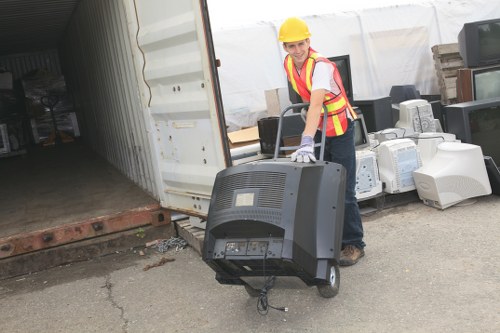
What Furniture Disposal in London Usually Includes
Furniture disposal is often broader than people expect. It is not just about taking a single item away. Many customers want a team that can manage lifting, loading, sorting, and removing a mix of household or commercial furniture in one visit. That is especially useful in London, where space is limited and access can be awkward.
Typical items we help remove include:
- Bed frames, mattresses, headboards, and wardrobes
- Sofas, armchairs, recliners, and sofa beds
- Dining tables, chairs, sideboards, and cabinets
- Office desks, office chairs, shelving, and meeting room furniture
- Bookshelves, coffee tables, and TV units
- Shop fittings, display units, and reception furniture
- Broken or damaged furniture that is no longer usable
In many cases, the service also includes the careful removal of furniture from upper floors, basements, back rooms, garages, lofts, or storage spaces. If an item needs to be dismantled before it can be removed safely, that may also be part of the job. The key point is that the service is built around making the clearance easier for you, rather than leaving you to work out how to move large, heavy pieces yourself.

Why Local London Customers Choose a Professional Service
London is a city where logistics matter. A furniture disposal job that sounds simple on paper can become complicated once you factor in narrow hallways, permit-only parking, time restrictions, and shared entrances. Local knowledge makes a real difference. A team that works in London every day understands how to manage the practical side of removal work without causing unnecessary disruption.
For many customers, the main reason to book a local service is convenience. You do not need to hire a van, organise labour, lift heavy items, or figure out where the furniture should go next. Instead, the team arrives with the right tools and a plan for safely removing the items from the property. That can be particularly helpful for older residents, busy families, landlords with changeover deadlines, and office managers working to tight schedules.
There is also the question of disposal responsibility. Old furniture should be handled carefully, with attention to sorting, reuse where possible, and appropriate disposal routes for items that cannot be reused. A professional service helps take the guesswork out of the process and gives customers peace of mind that the job is being dealt with properly.

How the Service Works
Booking furniture removal should feel straightforward. Most customers want a process that is clear, fast, and flexible enough to fit around work, family life, or business operations. A well-run local service will usually follow a simple step-by-step process.
- Initial enquiry: You explain what needs removing, where the property is, and any access details that might affect the job.
- Assessment: The team reviews the volume, type of furniture, and any special requirements such as dismantling or difficult access.
- Booking: A suitable time is arranged, often with attention to access windows, building rules, or business opening hours.
- Arrival and loading: The team arrives prepared to remove items from the property efficiently and carefully.
- Completion: Once the furniture has been loaded, the space is left clear and ready for its next use.
Many London customers appreciate the ability to arrange a service with minimal disruption. That may mean early-day appointments before a shop opens, end-of-tenancy removals between occupancies, or careful collection from an apartment block where lift use and shared corridors need to be respected. In every case, the aim is to keep the process simple and avoid unnecessary delays.

Residential Furniture Disposal for London Homes
Homes across London come in many shapes and sizes, and furniture removal needs to suit them all. A top-floor flat in Camden is very different from a family house in Richmond or a terraced property in Lewisham. The furniture may be similar, but the access, parking, and lifting conditions are often very different. That is where a local service really helps.
Household customers often use furniture disposal when they are:
- Moving home and clearing bulky items they no longer want
- Replacing old bedroom or living room furniture
- Preparing a property for sale or letting
- Clearing a relative’s home after a change in circumstances
- Making space in a loft, spare room, garage, or conservatory
- Dealing with furniture that is damaged, outdated, or no longer needed
London households frequently face practical obstacles that make lifting and transporting furniture difficult. Many properties have narrow staircases, limited entrance space, or resident-only parking, and some buildings have rules about when movers can operate. A service experienced in furniture disposal London jobs can adapt to these conditions and keep the job moving safely.
For families and individuals who are already busy with work, children, or a move deadline, the time saved can be significant. Instead of trying to coordinate a friend with a van, or spending a weekend wrestling with a bulky sofa, you can arrange a proper removal service and focus on the rest of your plans.
Commercial Furniture Removal for Offices, Shops, and Managed Buildings
Furniture disposal is not only a domestic service. London businesses regularly need help removing office furniture, retail fittings, and items from shared or managed premises. A commercial clearance often has to be completed with minimal interruption to staff, customers, and neighbouring tenants. That makes reliable timing and efficient handling especially important.
Commercial customers commonly need removal for:
- Office moves and refurbishments
- Desk and chair replacement
- Shop refits and closure clearances
- Storage room and archive space clearing
- Reception area updates
- Property management and end-of-lease clearances
In busy areas such as Westminster, Shoreditch, Canary Wharf, South Bank, or Hammersmith, access may be limited by loading bays, building management rules, and time-sensitive operations. A local removal team understands how to work around these practical realities. That can make the difference between a smooth project and a stressful delay.
Useful for landlords and agents too
Landlords and letting agents often need furniture taken away quickly between tenancies. Perhaps a tenant has left behind a sofa, or the property is being reconfigured before new occupants move in. Prompt removal helps prepare the space for cleaning, decoration, and re-listing, which is why many property professionals look for flexible support they can rely on when schedules change.
What Makes London Furniture Disposal More Complicated?
There are many reasons why clearing furniture in London is different from doing the same job elsewhere. These challenges do not make the job impossible, but they do require planning and local experience.
Common London access challenges
- Restricted parking: Many streets have permits, meter zones, or short loading windows.
- Stair-only access: Flats and converted buildings often have no lift, or lifts that cannot take large items.
- Shared entrances: Communal hallways need to be kept clear and respected.
- Congested roads: Travel times can vary, especially during busy periods.
- Building rules: Some developments require advance booking for removals.
These factors can make DIY disposal much harder than expected. Even when a piece of furniture looks manageable at first, getting it out of the property and into a vehicle may be the hardest part. Professional removers are used to handling awkward routes, turning corners, and dealing with heavy lifting in tight spaces.
That practical experience matters. It helps reduce the risk of damage to walls, flooring, and fixtures, while also making the whole process quicker and safer for everyone involved.
Preparation Checklist Before Your Furniture Collection
A little preparation can help your furniture disposal appointment go smoothly. You do not need to do everything yourself, but it helps to have the key information ready and the access route as clear as possible.
Before the team arrives:
- Identify which items are being removed
- Check whether anything needs to be dismantled
- Clear smaller personal items from drawers, shelves, and tables
- Make sure the path from the furniture to the exit is usable
- Let the team know about stairs, lifts, or restricted access
- Tell the building manager if permission or booking is required
- Consider parking or loading arrangements if space is limited
If you are disposing of furniture from a flat, it can also help to speak to neighbours or building staff if access may affect shared areas. In some London buildings, lift bookings or loading bay times need to be arranged in advance. A local removal company will usually be used to this, but it is still helpful for customers to mention anything that could affect the schedule.
For office customers, having a room list or floor plan can speed up the job. It is also useful to tag items that are staying and items that are leaving. That simple step can prevent confusion, especially during a larger clearance or refurbishment project.
Pricing Factors for Furniture Disposal in London
Most customers want to know what influences the cost of furniture disposal. While exact prices depend on the job, a few common factors usually shape the quote. Understanding these helps you compare services fairly and choose the right option for your needs.
Typical pricing factors include:
- Volume: A single armchair is very different from a full house clearance or office fit-out.
- Item type: Large, heavy, or awkward items may require extra handling.
- Access: Upper floors, no lifts, narrow staircases, and difficult parking can all affect labour time.
- Dismantling: Some furniture may need to be taken apart before removal.
- Timing: Urgent or out-of-hours bookings may need special scheduling.
- Location: Different parts of London can involve different journey times and parking conditions.
Because every job is different, many customers prefer to request a free quote based on the details of the actual removal. That way, you get a more accurate idea of what is involved and can make a decision with confidence. If you are comparing options, make sure you are asking what is included: lifting, loading, access handling, and the removal of multiple items can all matter.
Transparent quoting is important. Customers should feel clear about what the service covers and what information is needed to assess the job properly. If you can provide photos, room details, or a simple item list, the quote process is usually easier and faster.
Why Choose a Local Company for Furniture Disposal in London?
Choosing a local team is about more than geography. It is about working with people who understand how the city works and how to complete removal jobs without unnecessary friction. London is busy, varied, and full of different property types. Local familiarity helps the service run more smoothly from start to finish.
Benefits of using a London-based service
- Better understanding of local access and parking conditions
- Experience with flats, terraces, mansion blocks, offices, and mixed-use buildings
- More flexibility for time-sensitive removals
- Awareness of common building rules and loading restrictions
- Quicker response for nearby areas
- More practical support for residential and commercial jobs
For many customers, the most valuable part of a local service is responsiveness. Furniture disposal often becomes urgent when a tenancy is ending, a business is changing premises, or a room needs to be cleared before decorating or renovation work starts. A local company is better placed to understand that urgency and work around it where possible.
Local service also brings accountability. You are dealing with a team that knows the area and is used to serving customers across different neighbourhoods, rather than a one-size-fits-all operation that may not understand London’s practical realities.
Areas Covered Across London
Furniture disposal needs can arise anywhere in the capital, from central boroughs to outer districts. A good local service should be able to cover a wide range of locations, including busy residential streets, commercial districts, and mixed-use developments.
Typical London areas may include:
- Central London locations such as Westminster, Holborn, and Covent Garden
- North London areas such as Camden, Islington, Hackney, and Haringey
- South London areas such as Lambeth, Southwark, Wandsworth, and Lewisham
- East London areas such as Tower Hamlets, Newham, Stratford, and Bethnal Green
- West London areas such as Hammersmith, Ealing, Hounslow, and Kensington
- Outer London areas and surrounding neighbourhoods where access still requires careful planning
Each area comes with its own characteristics. A narrow street in Notting Hill may need different loading arrangements from an office building in Canary Wharf or a family home in Bromley. That is why it helps to choose a service that has experience with a wide variety of London properties.
What Happens to the Furniture After Collection?
Customers often ask what happens after the furniture is removed. The answer depends on the item, its condition, and the route available for responsible disposal. In general, furniture should be handled in a way that keeps unnecessary waste to a minimum and follows appropriate disposal practices.
Where items are still usable, they may be suitable for reuse. If furniture is damaged, broken, or no longer fit for use, it needs to be dealt with through the correct disposal channels. Large or mixed-item clearances may also require sorting so that different materials and item types can be handled properly.
This is another reason many people prefer to book a professional service rather than try to manage disposal alone. Instead of worrying about where each piece should go, you can hand the job over to people who deal with this type of clearance regularly. It saves time and removes the uncertainty from the process.
Responsible removal matters because:
- It reduces the risk of furniture being left illegally or dumped irresponsibly
- It helps keep homes, streets, and commercial spaces clear
- It supports better sorting of items that may be reusable
- It gives customers a clearer and easier disposal option
Frequently Asked Questions
Can you remove just one item of furniture?
Yes, many customers book a service for a single bulky item such as a sofa, wardrobe, or bed frame. One-item removals are common, especially when access is difficult or the item is too large for a standard vehicle.
Do I need to dismantle furniture before collection?
Not always. Some furniture can be removed as it is, but larger items may need partial dismantling to fit through doors or stairwells. If you are unsure, mention it when you enquire so the team can advise.
Can you collect from flats and upper floors?
Yes. Many London jobs involve flats, maisonettes, and converted properties. It is helpful to share details about lifts, stairs, and any building access rules so the team can plan properly.
Is this service suitable for offices and commercial premises?
Absolutely. Office desks, chairs, shelving, reception furniture, and other commercial items are all common removal requests. Businesses often use the service when relocating, refurbishing, or clearing spaces after tenancy changes.
How far in advance should I book?
As soon as you know what needs removing, it is sensible to arrange a quote or booking. That said, urgent removals are often possible depending on availability and the size of the job.
What if my building has parking or access restrictions?
That is very common in London. Let the team know about permits, loading bays, concierge rules, or timed access windows before the appointment so the job can be planned around them.
Book Furniture Disposal in London with Confidence
If you need furniture removed quickly, safely, and with minimal disruption, a local service can make the whole process much easier. Whether it is one bulky item, a full room of old furniture, or a commercial clearance with tight deadlines, the right team can save you time and remove a lot of stress from the job.
From residential flats and family homes to offices, retail spaces, and managed properties, our service is built around the real conditions London customers deal with every day. We understand that access can be awkward, parking may be limited, and time is often short. That is why we focus on practical support that fits your situation.
Ready to clear the space? Contact us today to discuss your furniture disposal needs, request a free quote, or book your service now. If you are planning ahead or dealing with something urgent, we are here to help make the next step straightforward.
Common reasons customers reach out include:
- Moving house or ending a tenancy
- Replacing old or damaged furniture
- Clearing offices, shops, or shared buildings
- Preparing a property for sale or refurbishment
- Making room in a busy home or workspace
When you need furniture disposal in London, it helps to choose a service that understands both the city and the customer’s priorities: speed, care, clarity, and a hassle-free result. With the right team, bulky furniture does not have to be a burden for long.